


This Is American Rugby: You were at the Club 7's Nationals and Serevi RugbyTown Sevens, and watched the World Club 7's, what did you take away from those tournaments?
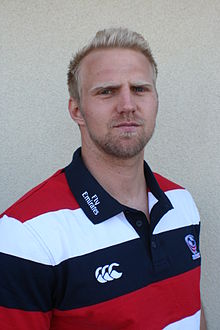
Matt Hawkins: Both tournaments were better than last year as far as the talent and the 7's that was played. At the Club 7's the first day was a little rough because teams were still getting used to the time change. The field was pretty slick so there was a lot of slipping and people all over the place but once the guys got into the next day of do or die rugby it got really, really good. At the World Club 7's there were definitely some guys that stepped up to that level and played some great rugby. A lot of those guys are already in the program, which is fantastic. It was another opportunity for them. The Serevi tournament was fantastic. There was a lot of great talent. It was some great rugby. I have my work cut out for me. I'm looking to get a lot more people down to the Olympic Training Center on a full-time basis. It's something I'm working on really hard right now.
Take the jump to read more.
TIAR: Any players that caught your eye?
MH: There were a lot of people within the different teams that played good rugby. It would be unfair for me to single out one or two. The biggest thing that I would say is that there were players with a lot of potential but was there anyone who could be picked up and dropped into the World Series tomorrow? No. But that's not our goal. Our goal is to pick these guys up and give them an opportunity over a six month period to mold into the player and athlete we want them to be and then hope they become better. That's what I was looking for.
TIAR: Is raising funds one of your biggest challenges now as coach?
MH: As a player I always knew that (trialists were brought in off budget meaning Alex Magleby had to raise the funds to bring them in) but I didn't always understand the circumstances. I knew coming into this that it would be a big part of the job. The more money we have the more opportunities we have and the more we can get done. That was always something that's at the top of my list. It's up to me to generate that money in our budget.
TIAR: You said you want to raise the number of players at the OTC, how many would you want?
MH: Ideally speaking we want to have somewhere between 25-30 but right now the goal is to get 20 plus athletes in here. It's fantastic we have a full-time facility and it's fantastic that we train full-time. It's fantastic that we have contracts. But if we take a real look at it and we're realistic about what's going on, and I don't think a lot of people are, we've got players 10, 11, and 12 competing against players 13, 14, and 15. So essentially you got six guys competing for a spot on the traveling tour and you have played 1-9 who essentially always know they're going. Unfortunately we don't have a rugby season that supports our program. When we get to December and it's time to contract new players no one is really playing at that point. The same thing in June when we contract players going into July the 7's season hasn't really kicked off yet so you don't really get to see people. That's where we get to a situation where 80% of the guys that were contracted two years ago are still on the team. I don't think that's a true reflection of performance contracts and the way it should be. It was a great start for us and now that's something we need to work on.
TIAR: Are you looking to address the size of the player's contracts?
MH: Yes, absolutely. But as a player that's something you have to take that on yourself. From my perspective I never signed a contract because I knew that the contract couldn't support me. I had to find a way to do that. There are some players that could live happily off the money they get. For the guys who have families that's a different story. We've got to work to create better opportunities for them but at the same time they have to want those opportunities. We all want more money but at the same time we have to work for it. We can't just want the reward but not put the work into it.
TIAR: Will players at the OTC be given consideration over a player like Blaine Scully who may be available during the year?
MH: It's a really fine line. They only guy really is Mike Palefau who's been good over the last year. We want guys in camp, we want to keep that team atmosphere and that competitive environment. Now, there are one or two guys that could step up and play but they would not be our first-choice priority at this moment but things could change.
TIAR: How do you sustain the momentum from the end of last year?
MH: A big piece of that momentum was brought out by the pressure of relegation. We have to create that environment down here and how we create that environment is by having a shadow for every player in the top 12. Basically players need to know there is someone waiting to step up and take your jersey. That's the first step. The second step is to actually understand what happened in those three tournaments and why we were able to be consistent and why we were able to win. It's a great watershed for us and we have to make sure we maximize it.
TIAR: Do you think the players have had a long enough offseason?
MH: It's a tough one. Last season we had the World Cup but if you look ahead to next season we will have a break at the end of May and will get back in things in July. We're always going to have different things like the Pan-Am Games, the Olympics, the World Cup, things that change our schedule but that's how it is. At this point I'm sure there are some guys that are a little banged up because they choose to go to Sri Lanka, which was a good financial decision for them, but maybe not for the program. We go to Fiji in September and then the Gold Coast so we don't have a lot of time. It's something that we need to work around.
TIAR: Are you going to keep playing?
MH: At this point I have no idea. At this point I want to be coaching. It's up to me to figure out. Ideally I would just be coaching.


No comments:
Post a Comment